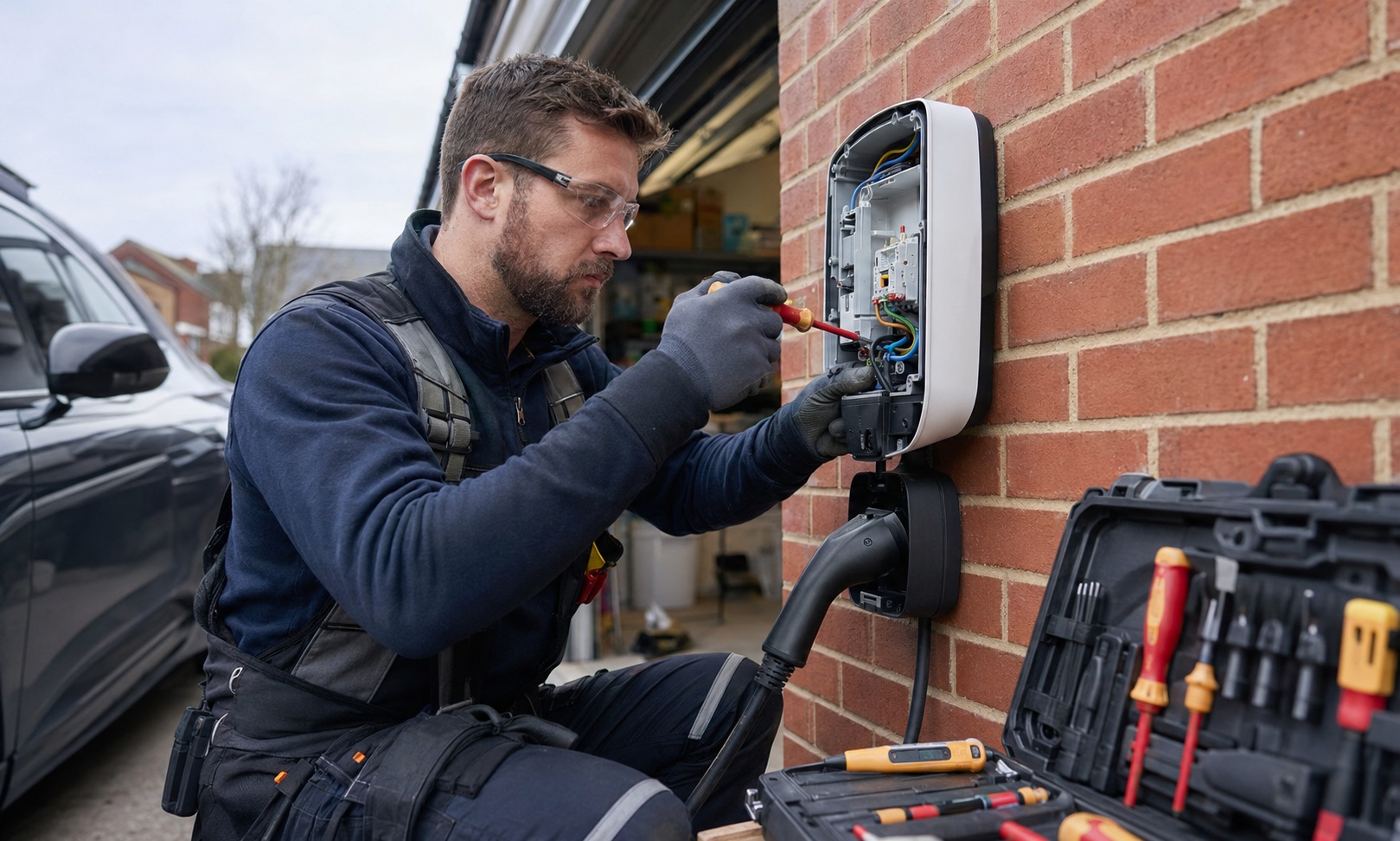
Installing a home EV charger is one of the most practical upgrades you can make as an electric vehicle owner. It gives you the convenience of charging overnight, helps reduce reliance on public chargers, and can make running an EV feel much simpler day to day.
However, a good installation is not just about choosing a charger and fixing it to the wall. It involves safety checks, electrical design, DNO notification, charger selection, certification and proper handover.
Here are ten things every homeowner should understand before booking an EV charger installation.
A standard 3-pin plug can charge an electric vehicle, but it is slow and should generally be treated as a backup rather than a long-term charging solution. For regular use, a dedicated wall-mounted EV charge point is safer, faster and more convenient.
Electrical Safety First describes a dedicated EV charge point as the safest and most convenient way to charge at home, provided it is installed by a qualified installer.
For most UK homes, a 7kW charger is the practical standard. It is much faster than a domestic socket and is usually enough to recharge most EVs overnight.
A high-quality charger can still become a poor installation if it is fitted badly. The installer should assess the existing electrical system, install suitable protection, test the work and provide the right certification.
In England and Wales, work involving a new circuit falls under notifiable electrical work under Approved Document P, and electrical work should be inspected and tested in line with BS 7671.
Before choosing an installer, ask:
A cheap installation that skips these steps may cost more later.
An EV charger places extra demand on your home's electrical supply. Before installation, the installer should check the consumer unit, main fuse, earthing arrangement, cable route and likely household load.
National Grid's domestic EV guidance states that EV charge point applications require site and supply details, charge point details and installer/customer information. It also confirms that internal wiring and installation must be carried out by a qualified electrician.
This is why a proper survey matters. In some cases, a photo-based survey is enough. In others, an in-person visit may be needed.
The Distribution Network Operator, or DNO, manages the local electricity network. EV chargers can affect network load, so the DNO may need to be notified or may need to approve the installation before work goes ahead.
UK Power Networks explains that in straightforward cases the installer can connect the charger and notify the DNO within 28 days, but in some cases the property supply may not be sufficient and may need upgrading first.
For the customer, the key question is simple: will the installer handle the DNO process for me? They should.
Most new private EV chargers in Great Britain must meet smart charge point regulations. These rules are designed to help shift charging to times when there is less pressure on the grid and to set minimum standards for access, security and consumer information.
Smart charging can also help you make better use of off-peak electricity tariffs. That said, not all smart chargers are equal. Some have better apps, better solar integration, better tariff compatibility or better customer support.
When choosing a charger, consider:
EV chargers need the correct electrical protection. This may include RCD protection, PEN fault protection, surge protection and suitable circuit design depending on the charger and property.
The IET has specific guidance on RCD protection for EV supply equipment under BS 7671.
Homeowners do not need to become electrical experts, but they should expect their installer to explain the safety approach in plain English. A good installer should be able to say what protection is being installed and why.
A typical UK home EV charger installation is commonly quoted in the region of £700 to £1,200 fully installed, depending on the charger model and the complexity of the work.
A quote should make clear whether it includes:
A low headline price may exclude key items. A higher quote may be better value if it includes a proper survey, certification and aftercare.
Government support has changed over time. GOV.UK currently lists chargepoint grant schemes for renters and flat owners, households with on-street parking using cross-pavement solutions, landlords and workplaces. Some schemes provide up to £500 towards eligible installations.
The important point is that eligibility depends on your property type, parking arrangement, installer and charger. Do not assume the grant applies automatically.
A good installer should be able to tell you:
Where the charger goes matters. The best position is usually close to where the car is parked, within easy reach of the charging port, and with a sensible cable route back to the consumer unit.
A longer or more complicated cable run may increase cost. Drilling through difficult walls, routing cable through garages, crossing driveways or upgrading protection can all affect the final price.
The best location is not always the cheapest one. For example, putting a charger near the consumer unit may reduce installation cost, but if the cable barely reaches the car, it may become frustrating every day.
A professional installation should finish with testing, setup and handover. The installer should check that the charger works, help connect the app where needed, explain how to start and stop a charge, and provide the relevant paperwork.
Commissioning should include:
This final stage is what turns a fitted device into a properly working home charging solution.
A home EV charger should make life easier, not more complicated. The best installations are safe, compliant, neatly fitted and clearly explained.
Before you accept a quote, check three things:
A well-installed EV charger is not just a box on the wall. It is part of your home's electrical system, your daily routine and your long-term EV ownership experience.