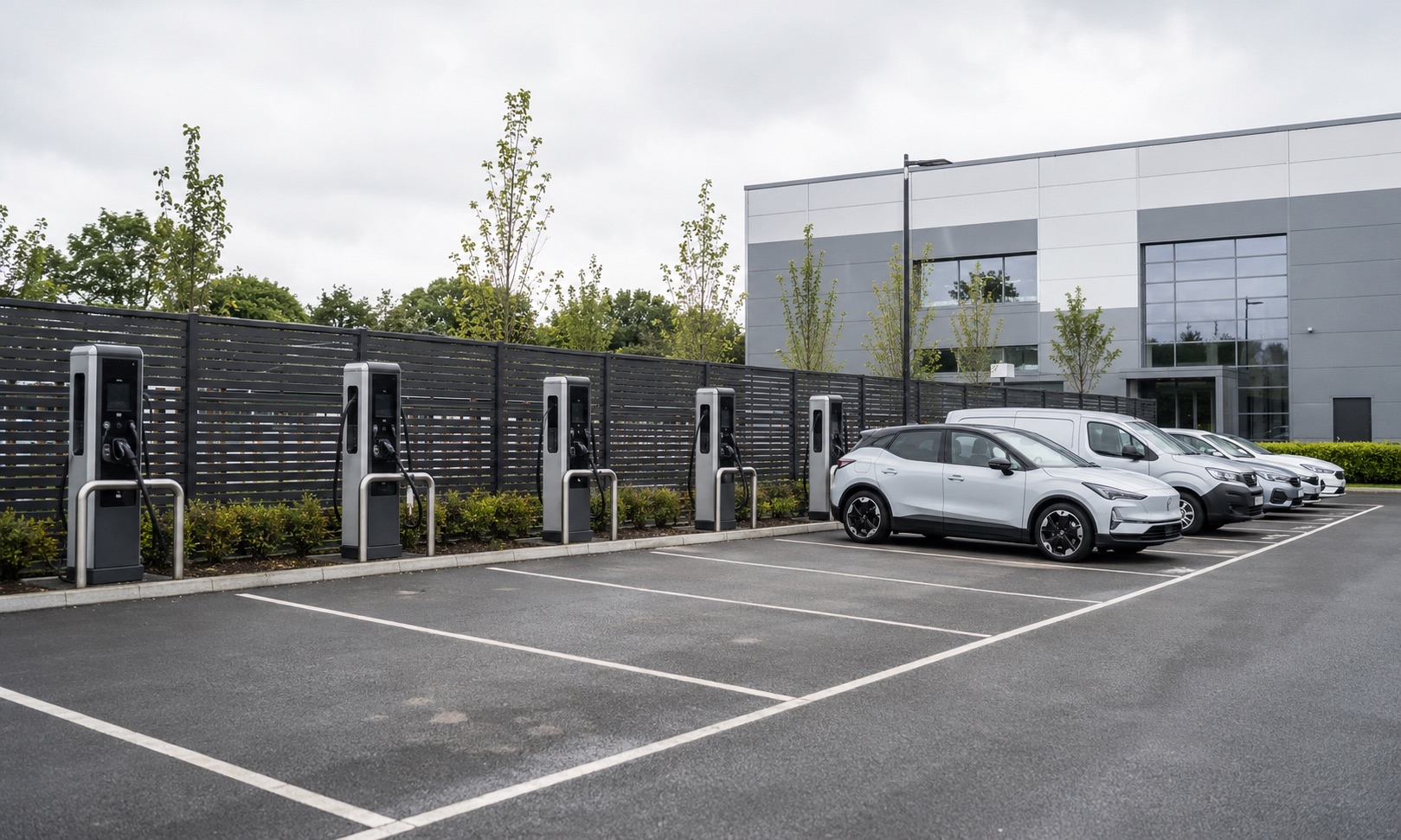
Installing a handful of charge points for an early EV fleet is usually straightforward. Planning infrastructure that can keep up with a fleet that will double or triple over the next few years is a different problem, and getting it wrong early on is expensive to fix later.
The most common infrastructure mistake is designing for the vehicles on site today rather than the fleet planned for the next three to five years. Retrofitting additional capacity later (new supply, new cabling, new charge points) is almost always more disruptive and expensive than building in headroom from the start.
A good infrastructure plan starts with your fleet transition timeline: how many vehicles convert to electric, and by when, so the electrical design and any grid upgrade can be phased sensibly rather than done twice.
Multiple charge points running simultaneously draw significantly more power than a single domestic-style installation. Many sites planning more than a handful of charge points will need a three-phase supply, and larger sites may need to work with their Distribution Network Operator (DNO) on a supply upgrade well before installation day. This can be one of the longest lead times in the whole project, so it's worth starting early.
Rather than provisioning enough raw electrical capacity for every charge point to run at full power simultaneously (which is rarely necessary and often prohibitively expensive), most multi-bay sites use dynamic load management. This automatically balances power across active charge points so the total site draw stays within the available supply, prioritising vehicles that need it most.
This is usually far more cost-effective than oversizing the electrical supply to cover a worst-case scenario that happens rarely, if ever.
How your fleet operates changes what "good infrastructure" looks like:
Many fleets end up using a mix of these models. It's worth planning infrastructure around how vehicles actually operate, not a single assumed pattern.
Workplace and fleet sites need to consider who can use each charge point (staff only, visiting fleet vehicles, or public access) and how usage is tracked. RFID or app-based access control, along with usage reporting, becomes more important as the number of charge points and users grows.
Government schemes supporting workplace and fleet charging infrastructure exist and change periodically. Eligibility depends on business type, site ownership and the specific scheme in place at the time. A good installer should be able to advise on current eligibility rather than leaving you to check independently.
A practical rollout usually looks like:
Designing the groundworks and supply capacity for the full plan up front, even if not every charge point goes in on day one, is usually the single biggest cost saving over the life of the project.