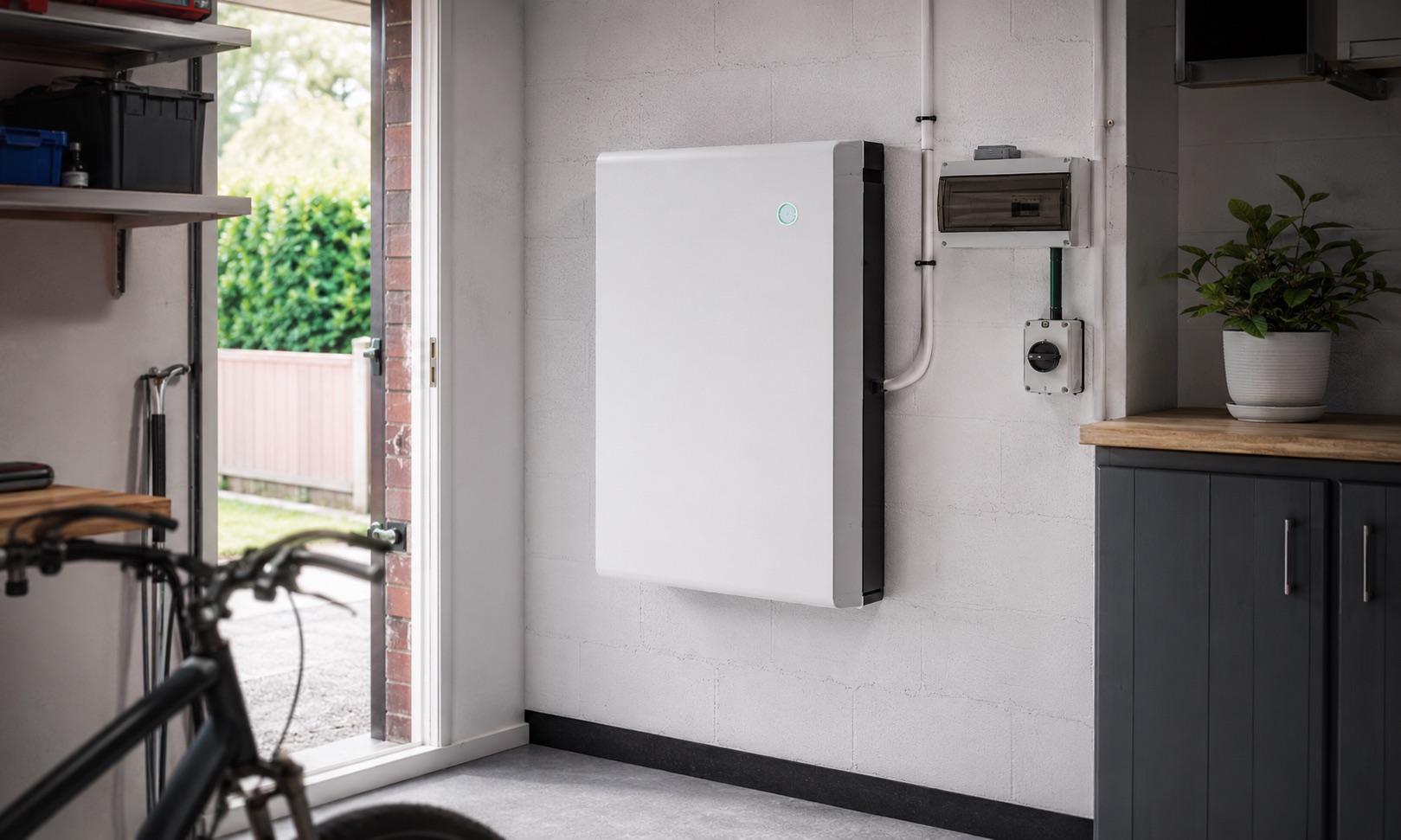
Battery storage is usually talked about as a solar add-on, but a battery doesn't actually need panels to be useful. Without solar, it earns its keep a different way: by shifting when you draw electricity from the grid, rather than by storing your own generation.
A battery installed without solar charges itself from the grid, typically overnight, during a cheap off-peak tariff window, and then discharges to power your home during the day or evening when electricity would otherwise cost more. This is often called "tariff arbitrage": buying cheap, using instead of buying expensive.
Some batteries can also provide backup power during a grid outage, though this depends on the specific model and installation. Not every battery system is configured to island itself from the grid.
The saving comes entirely from the gap between your cheap overnight rate and your standard daytime rate on an EV or time-of-use tariff. The bigger that gap, and the more of your daytime usage the battery can cover, the more you save. Without solar generation to fill the battery for free, the maths depends much more heavily on your tariff than a solar-paired system does.
This means a standalone battery generally makes more sense for households already on, or planning to switch to, a tariff with a meaningfully cheap off-peak window, rather than a standard flat-rate tariff where there's no price gap to exploit.
If you're on a standard flat-rate tariff with no cheap overnight window, a standalone battery has little price gap to work with and the numbers rarely justify the upfront cost. In that case, switching tariff first, even without a battery, is usually the better first step, with a battery to consider afterwards.
As with solar, the right battery size depends on your actual usage pattern rather than a generic recommendation. An undersized battery empties too early in the evening; an oversized one costs more upfront than the extra capacity is worth. A proper assessment of your usage and tariff is the only way to size this accurately.