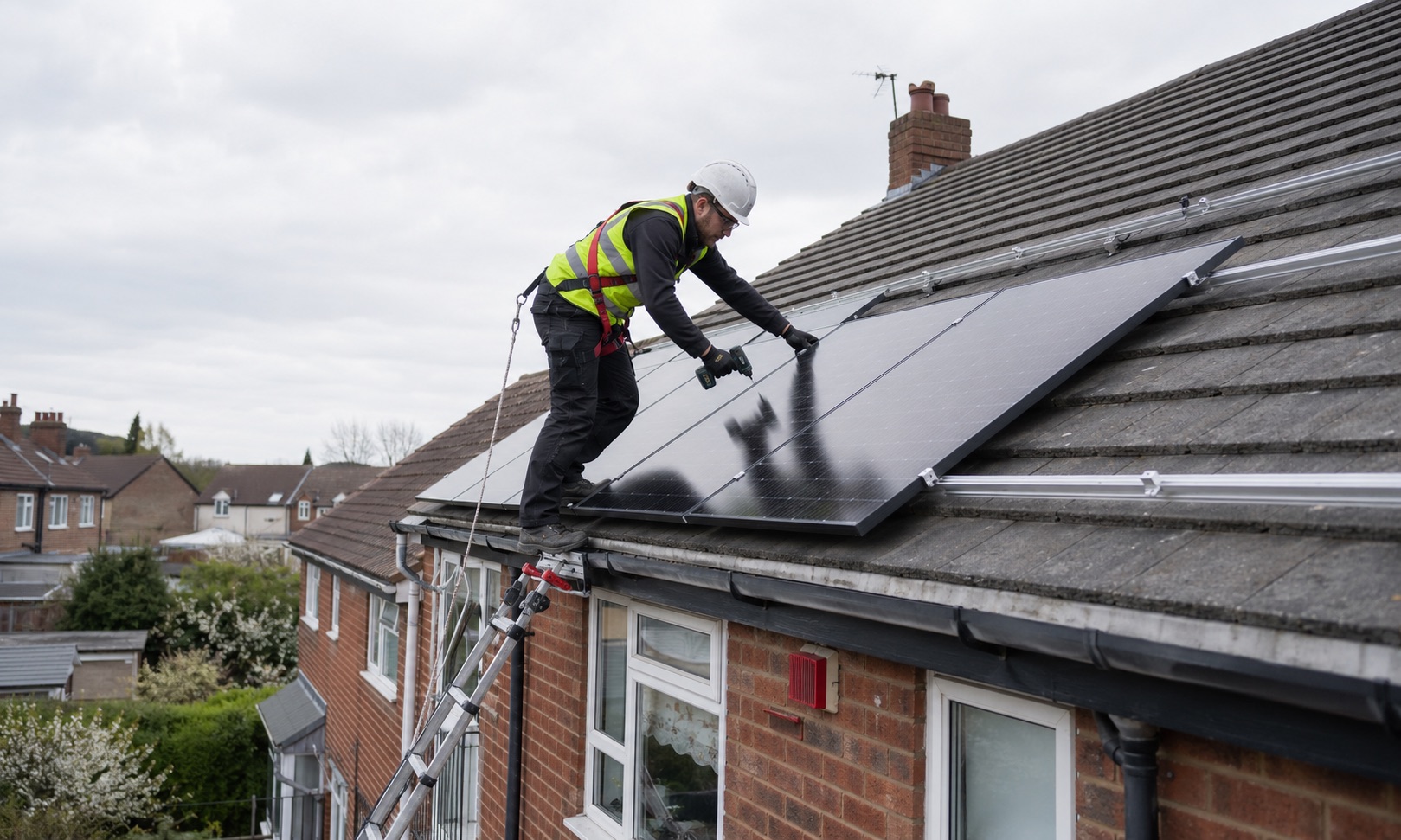
One of the most common questions we hear from homeowners considering solar is: "Do I need planning permission?" The good news is that for the vast majority of UK properties, the answer is no. Solar panel installation falls under Permitted Development Rights, meaning you can go ahead without applying to your local council.
But there are exceptions, and it is worth knowing them before you commit. Here is a clear breakdown of the rules.
Permitted Development Rights (PDR) are a set of rules that allow certain types of home improvements to go ahead without needing formal planning permission. The government introduced these to make it easier for homeowners to improve their properties and adopt renewable energy.
Solar panel installation on a domestic property is included under PDR, provided the installation meets specific conditions.
You can install solar panels under Permitted Development if all of the following apply:
If your property meets all of these criteria, you are free to proceed without any planning application.
There are situations where you will need to apply for planning permission before installing solar panels:
If your home is a listed building, you will need both Listed Building Consent and planning permission before any solar installation can take place. The rules are strict here because any changes to a listed building must preserve its character and appearance.
If you live in a Conservation Area, National Park, AONB, or World Heritage Site, Permitted Development Rights are more restricted. You may still be able to install solar panels, but the panels must not be visible from a highway, and you may need to apply for planning permission.
Certain flat roof installations or ground-mounted systems may also require planning permission depending on their size and location. Ground-mounted solar arrays, for example, are subject to different rules and size limits.
If you live in a flat or maisonette, Permitted Development Rights for solar panels do not apply in the same way. You will likely need to seek planning permission and may also need consent from your freeholder or management company.
Planning permission and Building Regulations are two separate things. Even if you do not need planning permission, your solar installation must still comply with Building Regulations, specifically Part P (electrical safety) and Part A (structural safety).
This is why it is essential to use a qualified, MCS-accredited installer. A professional installer will ensure your system is designed and fitted to the correct standards, and they will handle any necessary notifications to your local authority on your behalf.
Yes. Once your solar panels are installed, you should notify your energy supplier. If you plan to export surplus electricity back to the grid, you will need to register with the Smart Export Guarantee (SEG) scheme through an eligible energy supplier. This allows you to receive payments for the electricity you generate and do not use.
If you are adding a battery storage system alongside your solar panels, the same Permitted Development rules generally apply. However, battery systems installed outside (such as in a garden) may be subject to additional size restrictions.
For a straightforward domestic installation under Permitted Development, the process from survey to installation typically takes 4 to 8 weeks. This includes:
If planning permission is required, you should allow an additional 8 to 13 weeks for the application process.