
Understand your tariff, explore your setup and see how timing changes your estimated electricity costs.
Try the calculator ↓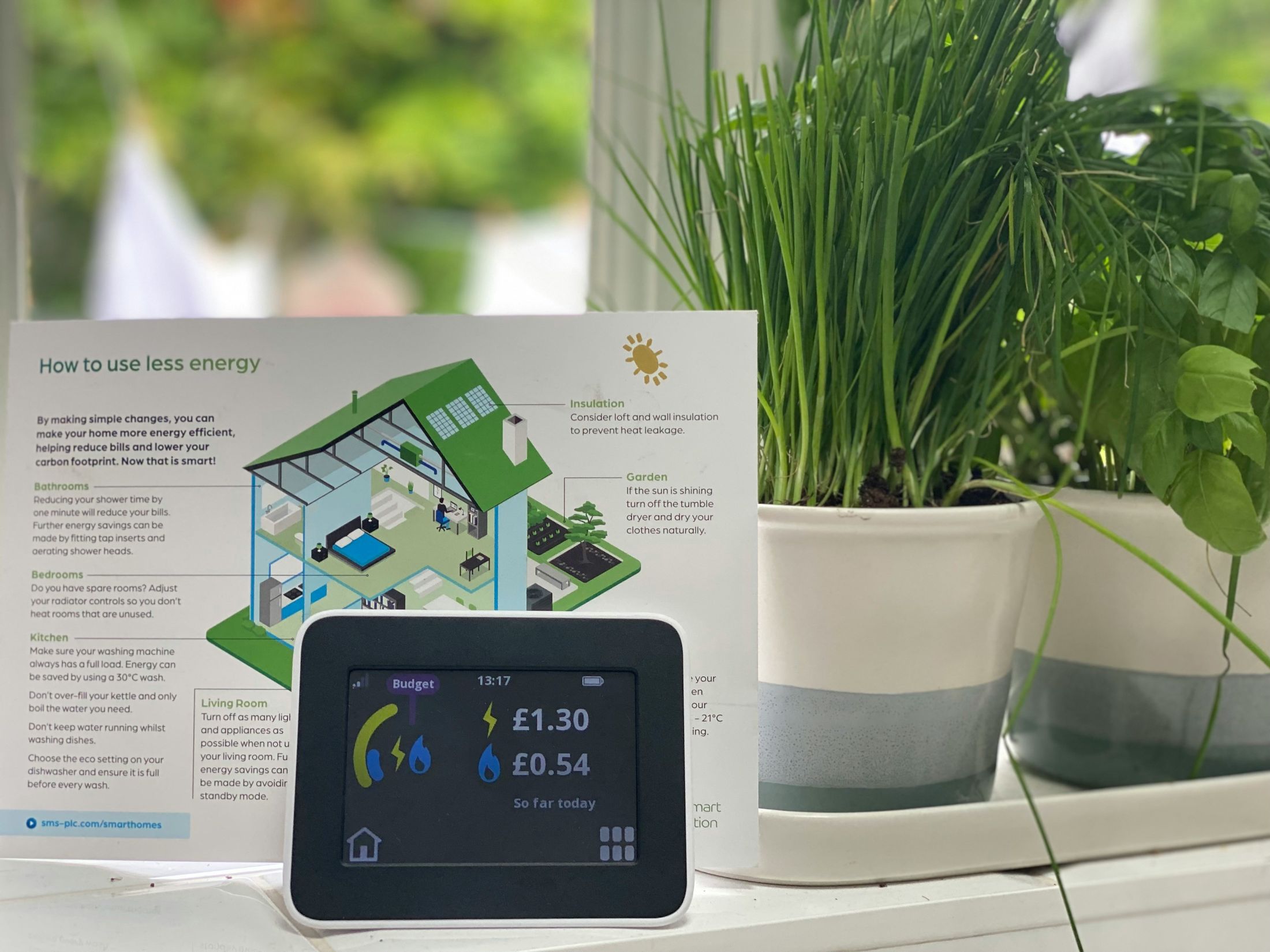
Choose your systems below. Your illustrative annual estimate updates instantly.
Select everything you want to explore.
National Grid stays selected — EV, solar and battery are modelled as additions to or discounts against a grid bill, not a standalone off-grid setup.
Smart Tariff: electricity prices vary by time of day.
Smart Tech: compatible controls schedule charging or storage around those prices.
An illustration, not a supplier quote or guaranteed saving. Your usage, tariff and system size will change the result.
Discuss your energy setup →Each system is modelled independently against a typical UK 3-bed home's electricity use, not as a single combined simulation: National Grid supply is costed at around £960/year, EV charging adds around £540/year, solar saves around £350/year, and battery storage saves around £220/year.
Smart Tariff and Smart Tech interact with those figures rather than adding their own line, because that's how they actually work. With both selected, EV charging cost drops by around 65% (most charging shifted into a cheap off-peak window), compared with about 15% for a smart tariff on its own (partial, manually-timed off-peak charging). Battery storage gains a further £400/year when both are selected, reflecting tariff arbitrage — charging cheap and discharging at peak prices. A smart tariff with no EV or battery to shift adds a small £40/year, since a time-of-use tariff's peak rate is often higher than a standard flat rate.
The EV running-cost comparison uses a typical petrol cost of about £1,200/year for equivalent mileage.
This is an annual electricity-cost illustration, not an installation payback calculation — it doesn't include installation cost, grants, or how long equipment takes to pay for itself.
Off-peak use helps only if the full tariff suits your routine.
Eligible solar exports earn payments through an export tariff.
Your meter, charger and battery need to support the chosen plan.
Compare the whole bill, including peak rates and standing charges.
The same unit price throughout the day. Compare against time-of-use options using your actual usage.
Compare the full unit rate and standing charge against your actual usage, not just the headline price. Useful as a baseline to compare time-of-use or EV tariffs against.
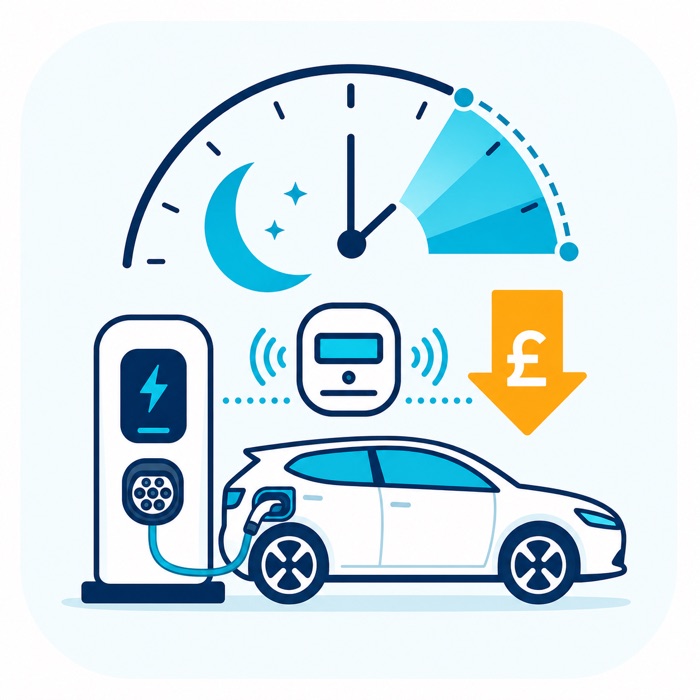
Different prices at different times. Useful when you move electricity use into cheaper periods.
Check the exact off-peak and peak windows, the peak-rate price, and whether your meter and appliances can actually shift use into the cheaper window.
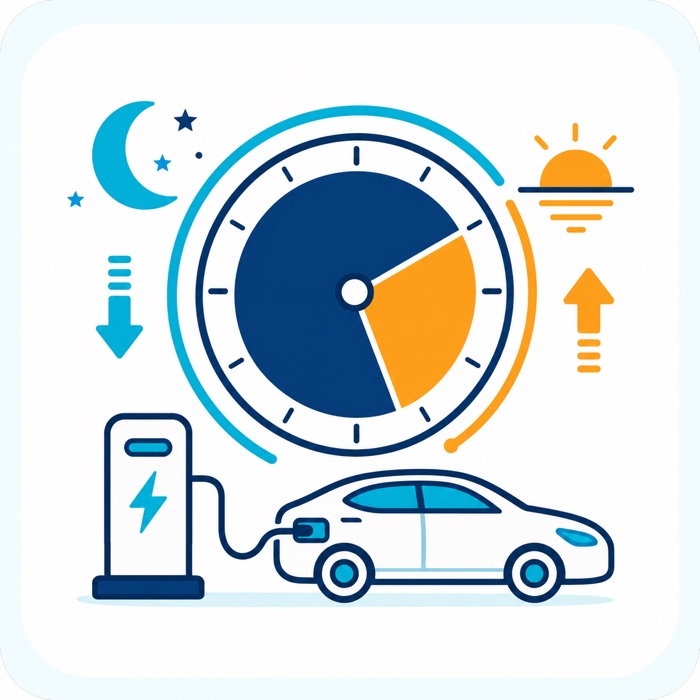
Plans designed around EV charging. Compare charging windows and the cost of the rest of your home's use.
Check the charging window length, whether your charger is compatible, and the standard rate charged for everything else in your home outside that window.
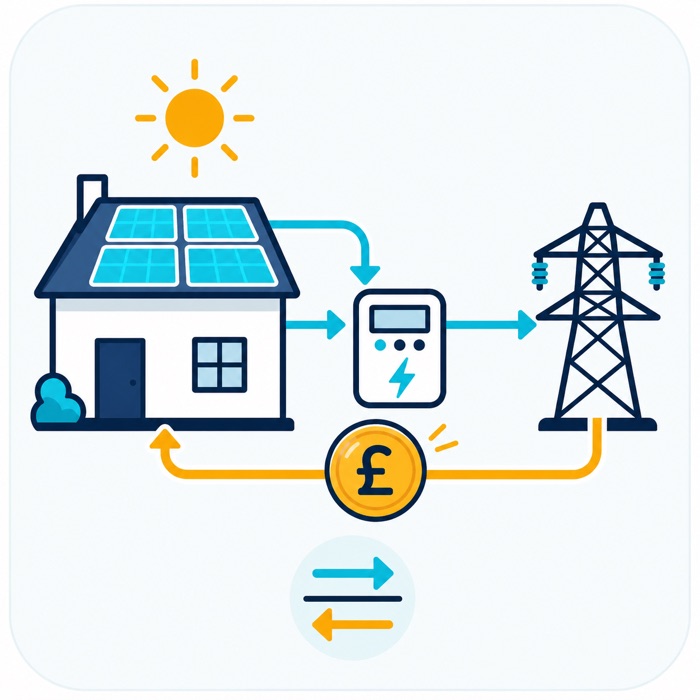
Get paid for eligible electricity sent to the grid. Compare export terms alongside your import tariff.
Check whether you're eligible (supplier size, export meter), whether the rate is fixed or variable, and the contract length before switching.
| Tariff type | Worth exploring for | Check first |
|---|---|---|
| EV overnight | Charging mostly at home overnight | Charger compatibility, off-peak window length |
| Heat pump | Homes with a heat pump or electric heating | Off-peak windows across the day, standing charge |
| Dynamic | Flexible usage, solar or a battery to shift around pricing | Price caps, how often rates update, needs an in-home display or app |
| Solar export | Homes with solar panels or a battery | SEG eligibility, export meter reading, fixed vs variable rate |
Use the electricity you need. An eligible export tariff pays for what you send back to the grid.
Explore solar & battery storage →Your supplier (or a separate SEG supplier) pays you per kWh for electricity your solar panels or battery send back to the grid, based on your export meter reading.
Fixed rates pay the same amount per kWh for the length of your contract. Variable rates track wholesale prices and can pay more at times of high demand, but aren't guaranteed.
A smart meter (or an MCS-certified installer's export reading) to register for most SEG tariffs. We arrange this as part of every solar install.
Storing surplus solar and exporting it later, when demand and prices are higher, can increase export income — but not every export tariff pays the same for battery-sourced exports, so check the terms.
Read the official rules: Ofgem's Smart Export Guarantee guidance ↗
Features depend on your equipment, tariff and compatible controls.
Set your ready-by time and use supported off-peak charging.
Compatible chargers prioritise available surplus solar.
Schedule storage and discharge around your tariff.
Review energy use and generation through supported apps.
Talk to us about EV charging, solar and battery storage.