
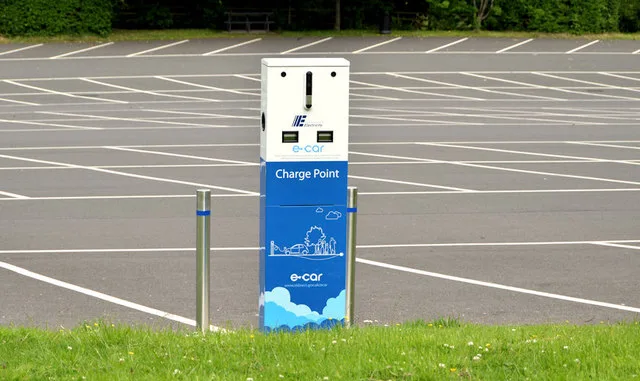
The West Midlands Combined Authority has £14.549 million of Local Electric Vehicle Infrastructure capital funding approved for delivery. In plain English, the money is intended to help turn public charging plans into real charge points, particularly for people who cannot install one at home.
It is good news, but it is not a promise that thousands of chargers will appear next month. Site selection, electricity connections, procurement, parking rules and construction all take time. What the funding does provide is a serious, multi-year foundation for a larger and more dependable local network.
LEVI, short for Local Electric Vehicle Infrastructure, is a UK government programme that gives local and combined authorities capital funding for public EV charging. Its strongest use case is local, lower-powered charging in places where residents do not have off-street parking.
The Department for Transport's published allocation lists £14.549 million for the West Midlands Combined Authority and marks the project as "approved for delivery". In February 2026, WMCA's Investment Board approved drawing down £14.5 million to support contract awards and installation of an EV infrastructure network across the region.
The fund can support the physical and enabling work needed for public chargers. That may include charge-point hardware, civils, electricity connections and the less visible groundwork needed to make sites commercially viable.
The wider regional ambition is larger than this single allocation. WMCA has previously described plans combining roadside lower-powered chargers with larger rapid and ultra-rapid transit stations. LEVI is one part of that programme, not the entire public-charging budget.
For drivers, the most meaningful outcomes would be:
Probably not, and an equal split would not necessarily be sensible. Birmingham, Coventry, Dudley, Sandwell, Solihull, Walsall and Wolverhampton have different housing, travel and electricity-network constraints.
Dense streets with large numbers of terraced homes may justify clusters of lower-powered overnight chargers. A less dense area may need fewer sites but better strategic coverage because drivers travel farther between them. Rural and edge-of-region gaps also cost more to solve if demand is initially lower or a grid connection needs upgrading.
The right test is not whether every council receives the same number of plugs. It is whether residents can find dependable charging close to home or along a normal journey.
The funding is approved for delivery, but the public sources do not give a single region-wide completion date for every site. Procurement and contracts come first, followed by local consultation, permissions, grid work and installation.
That makes live maps more useful than headline targets. Drivers considering an EV today should base the decision on chargers that are already available, while treating the LEVI programme as evidence that the network should continue expanding.
LEVI reduces part of the capital burden, but it does not set one permanent price per kWh. Operators still have electricity, maintenance, support and payment costs, and tariffs may vary by location, speed, membership and time of day.
The programme should be judged on more than the cheapest advertised rate. A slightly dearer charger that works, accepts contactless payment and is available near home can be more useful than a cheaper unit that is frequently blocked or out of service.
Look for four practical signs of progress:
The £14.549 million allocation is not a quick fix, but it is a meaningful commitment. It gives the West Midlands a funded route to tackle the hardest part of the EV transition: convenient charging for people who cannot simply plug in on a driveway.
If you are buying an EV now, check today's local network. If you are wondering whether the network will still be improving in three or five years, LEVI is one of the strongest reasons to be cautiously confident.
The Department for Transport lists £14.549 million for the West Midlands Combined Authority, with the project approved for delivery. This is often rounded to £14.5 million in local reports and governance documents.
No. LEVI is particularly relevant to local public charging, including lower-powered residential infrastructure for people without driveways. Regional plans can also sit alongside separate rapid and ultra-rapid charging projects.
The capital fund is aimed at local public infrastructure rather than an ordinary private driveway installation. Separate national grants may apply to eligible renters, flat owners, landlords or approved cross-pavement solutions.
Sources: GOV.UK LEVI allocations, WMCA Investment Board decision, WMCA regional announcement. Checked 31 October 2026 — recheck figures before relying on them, as funding and delivery status can change.