
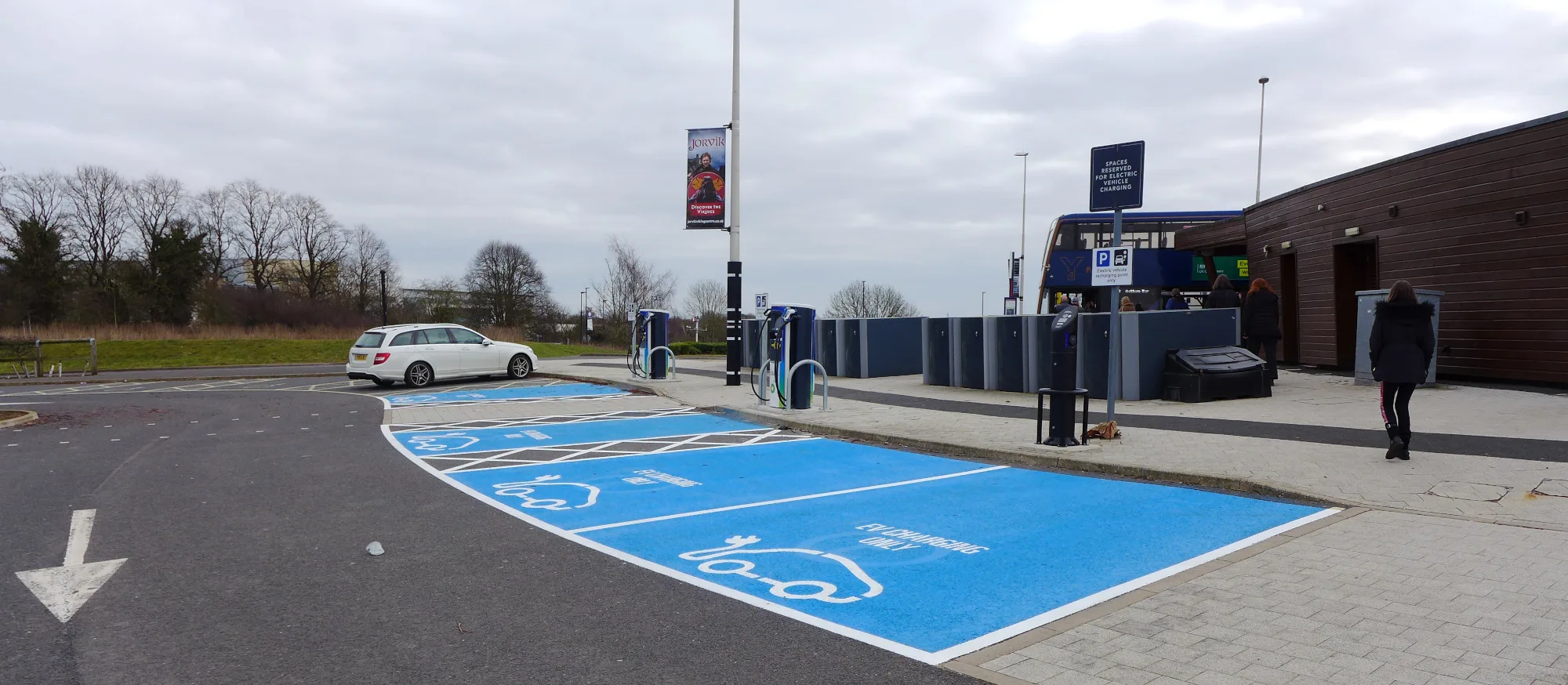
EV charging is available at six West Midlands Park and Ride rail stations: Bromsgrove, Longbridge, Solihull, Rowley Regis, Tile Hill and Yardley Wood. The basic routine is simple: park, plug in, take the train and return to a car with more range.
The network is currently moving from Mer to Be.EV, so drivers may see a mixture of branding and payment systems. TfWM says the updated Be.EV rate for fast chargers is 39p/kWh off-peak in the app, 54p/kWh during the day in the app and 64p/kWh for contactless pay-as-you-go. The changes are being introduced gradually, so check the charger or app before starting.
| Station | Useful for | What to check before travelling |
|---|---|---|
| Longbridge | Cross-City Line into Birmingham | Live availability and station parking rules |
| Solihull | Birmingham and Chiltern-route journeys | Charger status and local parking charges |
| Rowley Regis | Commuting from the Black Country | Bay availability during the morning peak |
| Yardley Wood | South Birmingham commuters | Whether your planned stay suits the charger speed |
| Tile Hill | Coventry and Birmingham journeys | Current network branding and payment method |
| Bromsgrove | Longer-distance commuters from the south-west | Parking opening times and live charger status |
This is a planning guide, not a guarantee that a socket will be free. Check live availability before setting off and keep a backup charger in mind.
TfWM's page contains both the previous Mer price and the newer Be.EV transition tariffs. For chargers already moved to Be.EV, it lists:
TfWM notes that the new pricing is being introduced gradually. In other words, do not assume every unit changed on the same day. The price displayed in the app or on the charger before you confirm the session is the one that matters.
Parking charges may apply separately. Paying for electricity does not automatically pay for the car park or rail journey.
Yes, if you expect to use these sites regularly. TfWM says the app offers the lowest available rates and lets you find chargers, start and stop sessions, monitor charging, view history and download VAT receipts.
Contactless is still useful when you are in a hurry or do not want another account. The trade-off is price: at the published transition rates, contactless costs 10p/kWh more than the daytime app rate and 25p/kWh more than the off-peak app rate.
For a 30kWh session, that works out as:
| Payment method | Rate | 30kWh session |
|---|---|---|
| Be.EV app off-peak | 39p/kWh | £11.70 |
| Be.EV app daytime | 54p/kWh | £16.20 |
| Contactless PAYG | 64p/kWh | £19.20 |
Start with how much energy you actually need. If your EV averages 3.5 miles per kWh, adding 20kWh gives roughly 70 miles before allowing for weather and driving conditions. You may not need a full battery every day.
Then follow a simple routine:
Not necessarily. The charger and car negotiate the charging rate, and the session stops drawing significant power when the battery reaches its target. A long stay can still be useful because slower AC charging is well suited to a car parked for several hours.
Check whether the site has an overstay rule or requires the car to remain actively charging. Local signage and the app take priority over general guidance.
The physical chargers remain usable during the transition, but the branding, app, tariffs and support arrangements are changing. TfWM advises drivers to move to the Be.EV app because the Mer app will stop working when the transition is complete.
Be.EV also supports contactless cards, Apple Pay, Google Pay, WebPay, RFID cards and roaming services such as Octopus Electroverse and Zap-Pay. Roaming prices are set by the roaming provider, so they may differ from Be.EV's direct rate.
Park and Ride charging works best as part of the commute rather than a separate errand. Longbridge, Solihull, Rowley Regis, Tile Hill, Yardley Wood and Bromsgrove give drivers six places to leave the car charging while continuing by rail.
Download the Be.EV app, check the live unit and displayed tariff, and keep contactless as a backup. Most importantly, remember that charging availability, parking and rail travel are three separate parts of the journey. Check all three before setting off.
Yes. TfWM lists contactless cards, Apple Pay, Google Pay, WebPay, RFID cards and supported roaming partners. Direct contactless payment is convenient, but its published fast-charger rate is higher than the app's off-peak and daytime rates.
The network is transitioning gradually from Mer to Be.EV. Drivers may see different branding or pricing during the changeover. Check the charger display or Be.EV app immediately before starting the session.
No. Electricity, parking and public-transport fares are normally separate charges. Read the car-park signs and pay for parking where required, even when you have already started and paid for an EV charging session.
Source: Transport for West Midlands EV charging guide. Checked 31 October 2026 — recheck tariffs and station status before travelling, as the Mer-to-Be.EV transition is ongoing.